Projects
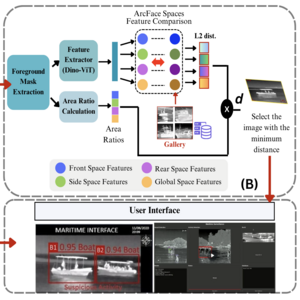
Object Tracking, Reidentification and Activity Detection for Maritime Surveillance
This research project, conducted with the collaboration of Sri Lankan Navy, was focused on developing a thermal-based maritime surveillance system for 24×7 coastal monitoring, combining real-time vessel tracking, automatic suspicious activity detection, and a viewpoint-invariant vessel re-identification module. The system is integrated into an interactive GUI that supports continuous situational awareness and alerting. The re-identification method matches vessels across different camera viewpoints by leveraging fine-grained shape cues, while the activity detection pipeline processes the live stream in real time to flag high-risk behaviors (e.g., patterns consistent with human trafficking).
Demo Repository Paper
LLM Agents Based Autonomous Penetration Testing
This project develops an automated penetration testing tool that leverages LLMs and ML to help address the cybersecurity skills shortage. It uses a multi-agent system with a hierarchical RAG architecture to handle dynamic attack-surface mapping and strategy identification throughout the pentesting workflow. The system combines LLM-driven reasoning, reinforcement learning, and in-context learning, and follows MCP protocol and OOP design using frameworks such as PyTorch, LangChain, OpenAI, and Hugging Face Transformers.
Demo Repository Paper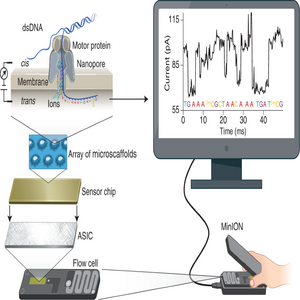
Encoding and Decoding Data into DNA Using an Alphabet of DNA Sequences
At Monash University, Australia, conducted research on DNA-based data storage, focusing on encoding and decoding digital information using an alphabet of DNA sequences for ultra–high-density storage. Under the supervision of Prof. Emanuele Viterbo, developed deep learning models (CNN and LSTM) to classify nanopore electrical signals corresponding to symbols in the DNA alphabet, achieving strong classification performance. Enhanced robustness on real-world nanopore data by incorporating first-order filtering and Markov chain based sequence modeling to reduce noise effects and improve decoding reliability.
Article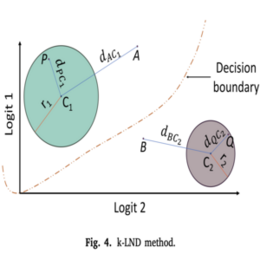
Robust Open Set Classification for Encrypted Traffic Fingerprinting
Developed a lightweight network traffic classification framework tailored for resource-constrained edge/network devices (e.g., routers, gateways, embedded monitors). The approach combines deep learning feature extraction with statistical modeling to maintain accuracy while keeping compute and memory costs low. A key contribution is an aggressive 4-bit quantization strategy that compresses the classifier to a 4-bit representation, enabling efficient on-device inference with only about a 4% reduction in performance.
Paper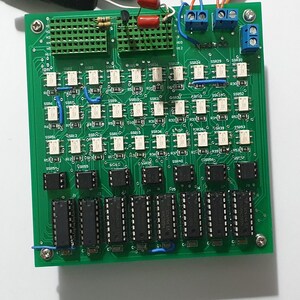
Smart Breadboard
In this project, we designed a smart breadboard using a MOSFET matrix to support virtual experiments during pandemic periods. Connections between columns and rows are made by switching on MOSFETs according to a user input. Users design circuits through the GUI, which are automatically implemented on the smart breadboard by switching MOSFET switches. The project won the IEEE CAS Student Design Competition 2020/21 in Sri Lanka and was selected for the IEEE Region 10 finals.
Video Report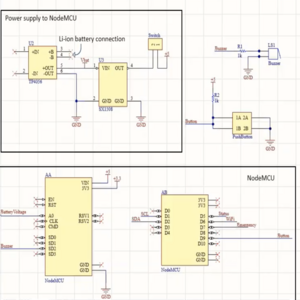
ELDERBOT : Elderly Care Electronic Product
Designed an electronic product to assist elderly people in a fall or an emergency situation by sending alarm messages to their relatives. The process included a user study, brainstorming, circuit and enclosure designing, circuit fabrication, algorithm development, web interface development and testing phases. Used an MPU6050 sensor, NodeMCU, and MQTT, and HTTP protocols. Developed software and a UI for user login and profile management using HTML and Javascript.
Video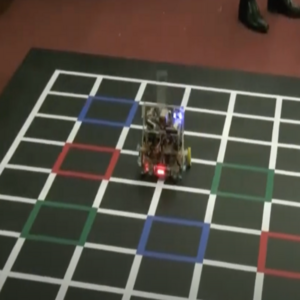
Autonomous Mobile Robot
Designed and developed a two-robot collaborative system for autonomous task execution. The primary robot is a mobile autonomous platform that performs robust line and dashed-line following, solves line mazes using a DFS-based exploration strategy, and completes an end-to-end manipulation workflow: it collects coins, detects and classifies them by color, sorts, and unloads them at designated locations. A secondary stationary assisting robot coordinates with the mobile robot via wireless communication and actively clears obstacles from the route, improving reliability and ensuring uninterrupted navigation and task completion.
Repository